



- Hyaluronic Acid
- Coconut Milk
- Kojic Acid
- Niacinamide
- Aloevera
- Vitamin E
- Vitamin C
- Beta Carotene
- Panthenol (Vit. B5)
- Avocado Oil
- DUB DPHCC
- Lactic Acid
- Turmeric Extract
- Shea Butter
- Arabic Coffee & Cocoa
- Suncat D
- Lavender Hydrosol
- Dandelion Extract
- German Chamomile
- Collagen Type 1 & 3
- Biotin
- L Glutathione
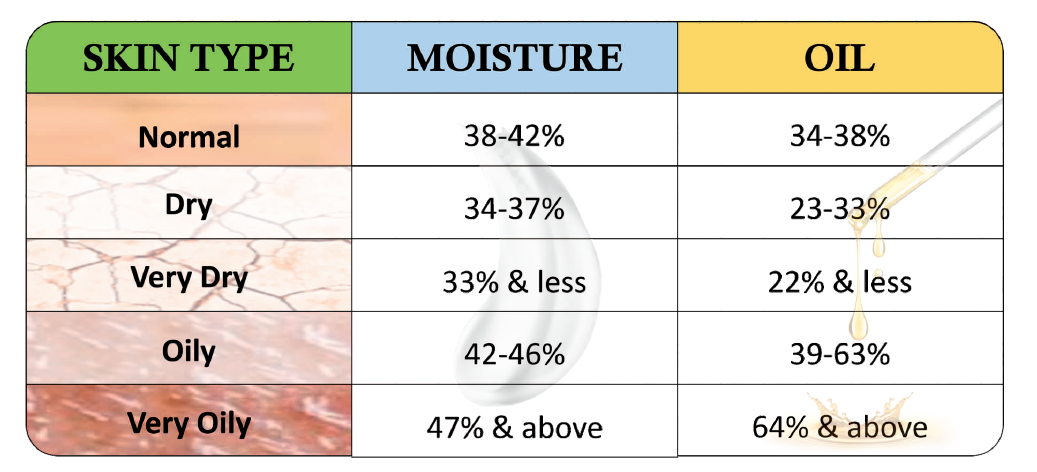
Your Facial Skin Type
Depends on Moisture and Oil (Sebum) Percentage as below.
Factors which disturbs Moisture-Oil Balance of Facial Skin
The moisture-oil balance of facial skin, which is crucial for a healthy protective barrier (known as the acid mantle), is a delicate equilibrium that can be disrupted by both internal and external factors. An imbalance often leads to a cycle of excess oil, breakouts, dryness, or sensitivity.
External & Environmental Factors
- Harsh Skincare Products: Using strong cleansers, bar soaps (which are often alkaline), or alcohol-based toners can strip away the skin’s natural oils and protective acid mantle. This triggers the skin’s sebaceous glands to produce even more oil to compensate, leading to a greasy yet dehydrated state.
- Over-Cleansing and Over-Exfoliating: Washing your face too frequently or using abrasive physical scrubs can damage the skin barrier, leading to moisture loss and a compensatory increase in oil production.
- Incorrect Moisturizer Use: Skipping moisturizer (due to the misconception that oily skin doesn’t need it) or using heavy, pore-clogging creams can disrupt the balance.
Environmental Conditions:
- Climate/Weather/Seasonal Change: Hot and humid weather can increase sebum production, while cold, dry air (from winter conditions or indoor heating/air conditioning) strips moisture from the skin, causing it to overproduce oil to compensate.
- UV, Blue Light & Pollution Exposure: Environmental pollutants and UV radiation create oxidative stress, which can damage the skin barrier and trigger excess oil production.
- Hot Water: Frequent washing or showering with hot water can deplete the skin’s natural lipid layer.
- Cosmetics and Makeup: Using oil-based or heavy, occlusive makeup products can trap oil and debris, leading to clogged pores and an imbalanced complexion.
Internal & Lifestyle Factors
- Hormonal Fluctuations: Changes in hormones, such as during puberty, menstruation, pregnancy, or menopause, can stimulate the sebaceous glands to produce more sebum.
- Stress and Lack of Sleep: Elevated cortisol (stress hormone) levels can increase sebum activity and impair the skin’s barrier function, leading to inflammation and increased oiliness.
- Genetics: Your natural skin type, including the size and activity level of your sebaceous glands, is largely determined by genetics.
- Diet and Hydration: A diet high in high-glycemic foods, processed items, sugar, and dairy has been linked to increased oil production. Insufficient water intake can also lead to overall dehydration, prompting the skin to produce more oil as a protective response.
- Age: The skin’s ability to maintain its moisture and oil balance naturally changes with age, often becoming drier as it ages.
- Medications and Health Conditions: Certain medications (like steroids) or medical conditions (such as PCOS or thyroid disorders) can also impact sebum production.
- Poor Awareness: How to Treat And Care ONE’s Skin Type
Seasonal SKIN MOISTURE Percentage
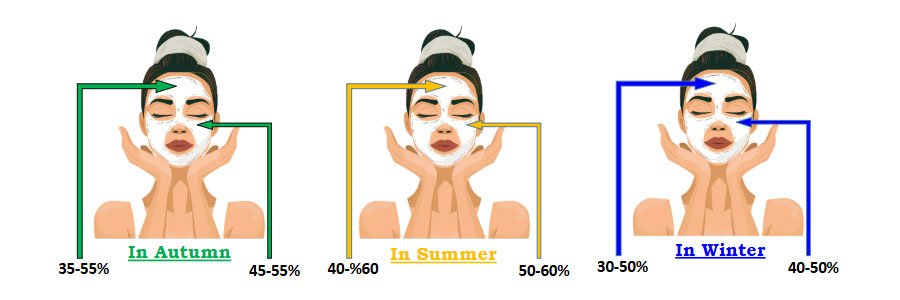
Please Note : In Autumn and Summer your may require more Moisturiser
How to Know Moisture-Oil Balance of Facial Skin?
To Know the Skin Type & to monitor the progress of Moisture-Oil Balance of Skin
adba Introduces
Complete Radiance Skin Health Beauty Kit with
Highly precise digital monitor device*
To detect the moisture & oil (sebum) of Skin in Seconds
*Available with beauty kit + Product usage, self-monitoring & progress report chart